




Choosing where to study isn’t just about rankings, nightlife, or rent prices — feeling safe where you live matters too. While big student cities often grab headlines for crime rates, new data for 2026 shows that many UK university cities offer a significantly safer student experience.
Using the latest safety index scores (ranked out of 100, with higher scores indicating safer cities), we’ve revealed the top 10 safest university cities in the UK for 2026. These rankings focus on overall city safety, including violent crime, property crime, and general perceptions of safety — not individual university campuses.
For a more detailed look at low-crime campuses, see our list of safest universities in the UK.
How did we compile the list?
We used Numbeo to collect the latest crime data (as of Jan 2026) for each of the universities’ cities. We then ranked the cities in order of highest safety index to find the top 10 safest cities and universities.
In contrast, we used the cities with the lowest safety index (the highest crime index) to find the most dangerous places for students to live.
The top 10 safest cities in the UK in 2026 for students
Below are the safest cities along with their safety index (ranked out of 100; the higher the better!)
- Falmouth (82.9)
- St Andrews (79.42)
- Chester (78.44)
- Hertfordshire (78.31)
- Durham (77.96)
- Winchester (77.5)
- Kingston upon Thames (74.81)
- Guildford (74.79)
- Lincoln (74.71)
- Norwich (73.94)
1. Falmouth
Safety index: 82.9
Topping the list for 2026 is Falmouth, officially the safest university city in the UK. This Cornish coastal town benefits from a small population, strong community feel, and consistently low crime levels. Students here enjoy a relaxed lifestyle, minimal violent crime, and a strong sense of safety both day and night — especially compared with larger urban centres.
2. St Andrews

Safety index: 79.42
St Andrews ranks second, combining historic charm with excellent safety credentials. The town’s close-knit student population and low levels of serious crime make it one of the most secure places to live and study in the UK. Many students report feeling comfortable walking alone at night, something not always possible in larger cities.
3. Chester
Safety index: 78.44
Chester places third thanks to its balance of city life and small-town safety. While it has a lively centre and nightlife, crime levels remain comparatively low, particularly for violent and serious offences. Student areas are well-lit and centrally located, helping to keep safety concerns to a minimum.
4. Hertfordshire
Safety index: 78.31
Hertfordshire ranks highly despite its proximity to London. Many student towns within the county benefit from suburban layouts, quieter residential areas, and strong transport links without the higher crime rates associated with central London. For students wanting city access without city-level risk, Hertfordshire stands out.
5. Durham
Safety index: 77.96
Durham consistently performs well for student safety. Its compact city centre, high student-to-resident ratio, and visible policing contribute to lower crime rates than most UK university cities. Students benefit from a strong sense of community and clear separation between student and nightlife zones.
6. Winchester
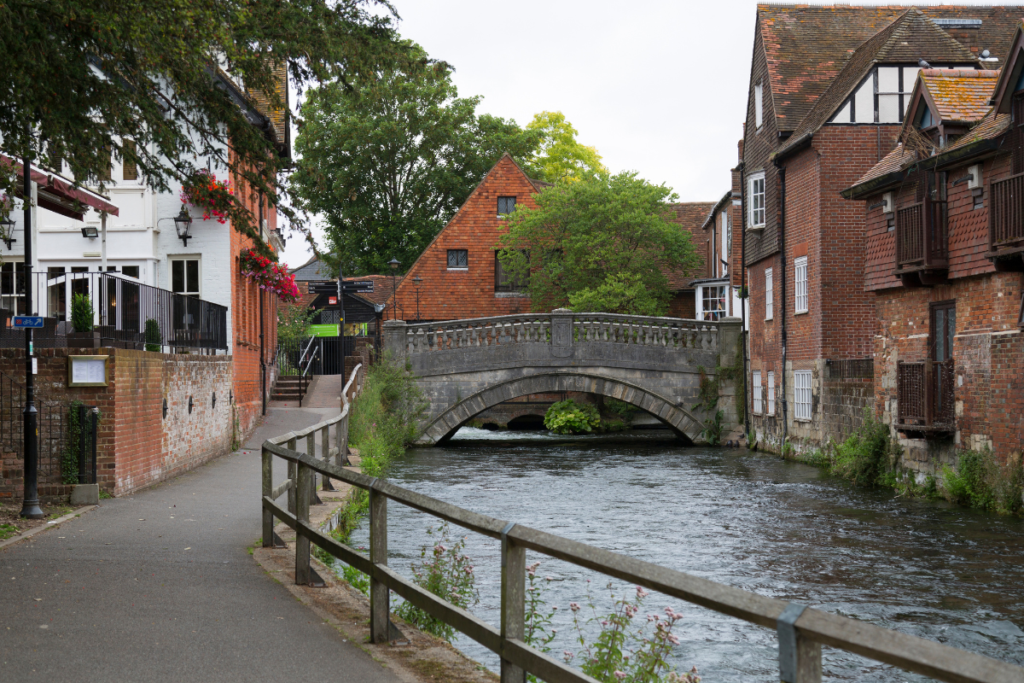
Safety index: 77.5
Winchester’s reputation as a calm and historic city is reflected in its safety score. Serious crime is rare, and most reported incidents are low-level. For students prioritising peace of mind alongside academic life, Winchester remains one of the safest choices in 2026.
7. Kingston upon Thames
Safety index: 74.81
Despite being part of Greater London, Kingston upon Thames performs strongly on safety. Its riverside setting, well-managed town centre, and student-heavy neighbourhoods help keep crime levels lower than many other London boroughs, making it one of the capital’s safer student locations.
8. Guildford
Safety index: 74.79
Guildford ranks eighth, offering a commuter-town feel with relatively low crime rates. The city benefits from well-lit streets, a compact centre, and strong transport links, while avoiding many of the safety issues seen in larger urban hubs.
9. Lincoln

Safety index: 74.71
Lincoln continues to grow as a student city while maintaining a solid safety profile. Although the student population has increased, crime levels remain below the national average, particularly for violent offences. Student areas are well-established and largely concentrated around the city centre.
10. Norwich
Safety index: 73.94
Rounding out the top 10 is Norwich. Known for its cultural scene and historic streets, Norwich manages to balance city life with relatively low crime. Most reported incidents are minor property offences, with lower levels of serious violence than many comparable UK cities.
Why are smaller cities safer for students?
Across the 2026 data, the safest university cities tend to share key characteristics:
- Smaller or mid-sized populations
- High student-to-resident ratios
- Strong community policing
- Defined student neighbourhoods
- Less nightlife-driven crime
Smaller university cities often provide a safer environment for students because of their size, layout, and community dynamics. With fewer residents and a higher proportion of students, it’s easier for local authorities and universities to monitor key areas such as student housing, nightlife zones, and transport routes.
These cities typically have more defined student neighbourhoods, meaning students are less spread out and more likely to live close to campus and each other. This reduces the need for late-night travel across unfamiliar areas and makes it easier to maintain well-lit streets, visible policing, and targeted safety initiatives.
There’s also often less nightlife-driven crime in smaller cities. While students can still enjoy bars, pubs, and social events, the scale is usually more manageable than in major metropolitan areas, where large crowds and busy city centres can increase the risk of theft and antisocial behaviour.
Finally, smaller cities tend to benefit from a stronger sense of community. Students are more likely to feel recognised and supported by local residents, businesses, and services, which can help deter crime and make it easier to seek help if something does go wrong.
This doesn’t mean large cities are unsafe — but students in smaller cities often report feeling safer day to day.
While no city is completely crime-free, the safest university cities in the UK for 2026 show that students don’t have to compromise on safety to enjoy a great university experience. Smaller and mid-sized cities like Falmouth, St Andrews, and Chester consistently outperform larger urban centres, offering lower crime rates, strong community feel, and student-friendly neighbourhoods.
That said, safety isn’t just about statistics. Choosing well-located accommodation, sticking to well-lit routes, and engaging with local safety advice can make a big difference wherever you study. Even cities that don’t top the rankings can still be perfectly safe with the right precautions in place.
Ultimately, where you live and study should feel comfortable as well as exciting. If peace of mind is high on your priority list, these cities prove that it’s possible to enjoy student life while living somewhere that feels genuinely safe — both day and night.

FAQs on the Safest UK Cities for Students (2026)
Falmouth is ranked as the safest university city in the UK for 2026, with the highest safety index score. Its small size, strong community feel, and low levels of serious crime make it a particularly reassuring place for students.
Other safe student cities in 2026 include St Andrews, Chester, Durham, Winchester, Guildford, Lincoln, and Norwich. These cities tend to have lower crime rates than major metropolitan areas while still offering strong student communities.
Safer student cities typically have lower rates of violent and property crime, clearly defined student neighbourhoods, good lighting and transport infrastructure, visible policing, and close collaboration between universities and local authorities.
Often, yes. Smaller cities and towns usually have more compact layouts, less nightlife-driven crime, and stronger community oversight, which can make students feel safer day to day compared with large urban centres.
Students can improve personal safety by choosing well-reviewed accommodation, locking doors and windows, sticking to well-lit routes at night, travelling with friends where possible, and using university safety services such as apps, patrols, or helplines.