





How did we compile the list?
We used Numbeo to collect the latest crime data (as of Jan 2026) for each of the universities’ cities. We then ranked the cities in order of highest crime rate to find the top 10 most dangerous cities and universities.
These rankings are based on university location, not campus safety itself — but they do reflect the wider risks students might face living in urban centres. To compare, check out our guide to the UK universities with the happiest students for a more holistic view of student life.
Which are the most dangerous university cities for 2026?
- Chichester (72.15)
- Preston (69.28)
- Middlesex (68.63)
- Huddersfield (64.46)
- Birmingham(63.94)
- Bolton (63.61)
- Wolverhampton (63.42)
- Coventry (61.71)
- Salford (60.58)
- Bradford (59.03)
So Chichester comes out atop as the most dangerous university city in the UK for 2026. The crime rate is quite high, which may be down to a few factors. Crime has increased in the past 5 years, and there are significant worries (rated as ‘very high’) around drug dealing, and vandalism and theft (property crimes).
Drug dealing is also one of the biggest worries in Preston, which came in second place. However, worries related to physical attacks due to skin colour, ethnic origin, gender or religion is ‘low’, which may be somewhat reassuring?
On the other hand, worries about being insulted were ‘very high’ in Middlesex, our third most dangerous university city overall.
Most dangerous universities 2026
- University of Chichester
- University of Lancashire
- Middlesex University
- University of Huddersfield
- University College Birmingham, Aston University, Birmingham City University, University of Birmingham, Newman University
- University of Bolton
- University of Wolverhampton
- Coventry University, University of Warwick
- University of Salford
- University of Bradford
1. University of Chichester
Taking the top spot for 2026, the University of Chichester is ranked as the most dangerous university area in the UK. Despite its smaller size and quieter reputation, crime data shows comparatively high incident rates in student-populated areas, particularly relating to antisocial behaviour and theft. While this may come as a surprise, it highlights how smaller towns can still present safety challenges for students.
2. University of Lancashire

In second place is the University of Lancashire. Students here experience elevated levels of property-related crime, including burglary and theft, particularly in shared housing areas. Violent crime rates are lower than in major cities, but overall incident levels remain high enough to place it near the top of the list.
3. Middlesex University
Middlesex University ranks third, following a familiar trend for London-based institutions. Higher levels of theft and robbery play a significant role in its position, particularly in busy commuter areas. While violent crime rates are not the highest nationally, students are advised to be cautious when travelling at night and securing personal belongings.
4. University of Huddersfield
In fourth position is the University of Huddersfield. Its ranking is largely driven by incidents of violent or sexual crime in nearby student neighbourhoods, alongside moderate levels of burglary and theft. Although campus security is strong, off-campus areas contribute heavily to its placement.
5. Birmingham universities
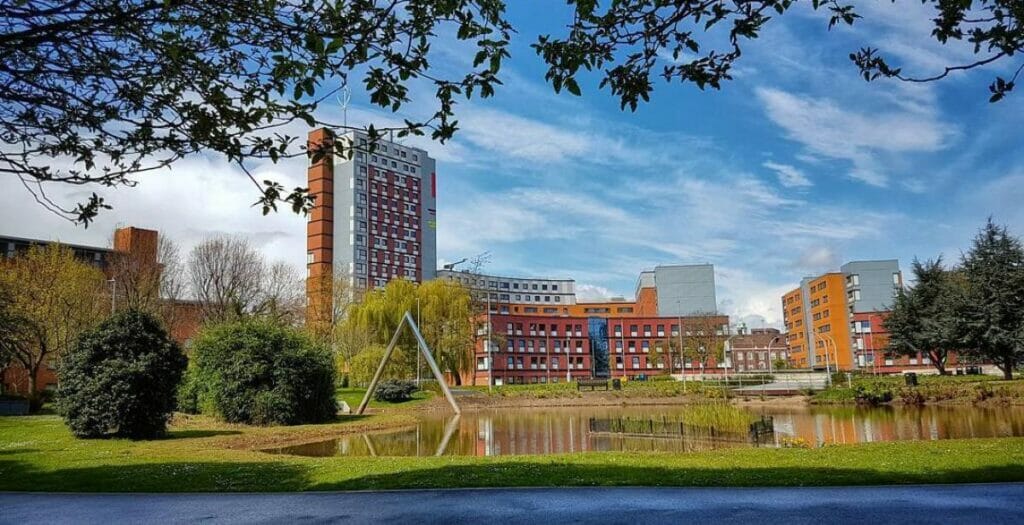
Several Birmingham institutions share similar crime profiles in 2026 and are therefore grouped together:
- University College Birmingham
- Aston University
- Birmingham City University
- University of Birmingham
- Newman University
Across Birmingham, students face higher-than-average levels of robbery and violent crime, particularly in inner-city areas. While experiences vary by campus and accommodation, the city-wide data places Birmingham firmly in the higher-risk category for 2026.
6. University of Bolton
The University of Bolton comes in at number six. Its position reflects relatively high levels of violent incidents compared with similarly sized towns, though rates of theft and burglary are lower than those seen in large metropolitan areas.
7. University of Wolverhampton

Ranked seventh, the University of Wolverhampton sees a combination of violent crime and property-related offences in student-heavy areas. Residential neighbourhoods popular with students contribute significantly to its overall score.
8. Coventry & Warwick University
These two universities share overlapping student populations and local crime trends:
- Coventry University
- University of Warwick
Coventry University’s city-centre location results in higher robbery and theft rates, while Warwick’s surrounding areas still experience notable burglary levels. Together, these trends place them eighth on the list.
9. University of Salford
The University of Salford ranks ninth for 2026. Its proximity to Manchester city centre increases exposure to theft, robbery, and violent incidents, particularly in off-campus housing areas. Campus facilities themselves remain well-secured.
10. University of Bradford
Rounding out the list in tenth place is the University of Bradford. While it still appears among the most dangerous university areas nationally, its overall incident levels are lower than those ranked above. Violent crime remains the primary contributor, though burglary and antisocial behaviour also play a role.
Whether this changes your decision on where to attend university or not, do take note of each university’s security measures and stay safe wherever you are!

FAQs on the Most Dangerous UK Universities (2026)
The University of Chichester is ranked as the most dangerous university area in the UK for 2026. This ranking is based on higher reported crime levels in surrounding student neighbourhoods, particularly theft and antisocial behaviour, rather than incidents occurring on campus itself.
Based on the latest 2026 data, the top 5 most dangerous universities are the University of Chichester, University of Lancashire, Middlesex University, University of Huddersfield, and a grouped cluster of Birmingham universities including Aston University and Birmingham City University. These rankings reflect crime levels in nearby student areas.
Universities are ranked using official police crime statistics for areas with high student populations. The data focuses on offences such as violent crime, sexual offences, robbery, burglary, and theft per 1,000 residents in neighbourhoods surrounding each institution.
Not always. While large cities like Birmingham and London still feature prominently due to population density and nightlife, the 2026 rankings show that smaller towns and regional universities can also record high crime rates in student areas.
Some of the safest universities in the UK consistently include Harper Adams University, St Mary’s University, University of Roehampton, Falmouth University, and the Royal Agricultural University. These institutions are typically located in lower-crime areas with strong campus security.
Most UK universities provide 24/7 campus security, CCTV coverage, controlled-access accommodation, safe walk schemes, and student wellbeing services. Many also use safety apps for alerts and emergency reporting.
Students can reduce risk by choosing well-reviewed accommodation, avoiding poorly lit routes at night, travelling in groups, securing valuables, and engaging with university safety briefings and local police advice.
No. The rankings are based on crime statistics from surrounding neighbourhoods. Universities separately monitor on-campus safety, which is often significantly lower than in nearby residential or nightlife areas.
International students are not inherently more at risk, but unfamiliarity with local areas can increase vulnerability. Universities typically provide targeted safety guidance during induction to help international students settle confidently.
Sometimes. Higher-crime areas can have lower rents, but popular student locations often remain expensive due to demand. Students should balance affordability with safety and proximity to campus.
 Nightlife
 Freshers
 Sustainability
 Employability
 Inclusion
 Innovation
 Happiness
 Societies